Calyx Point Alternatives: A Migration Guide for Independent Brokers in 2026
A practical guide for brokers evaluating Calyx Point alternatives and planning a migration. Covers data export realities, modern LOS options, the Calyx Path question, and a step-by-step migration framework.
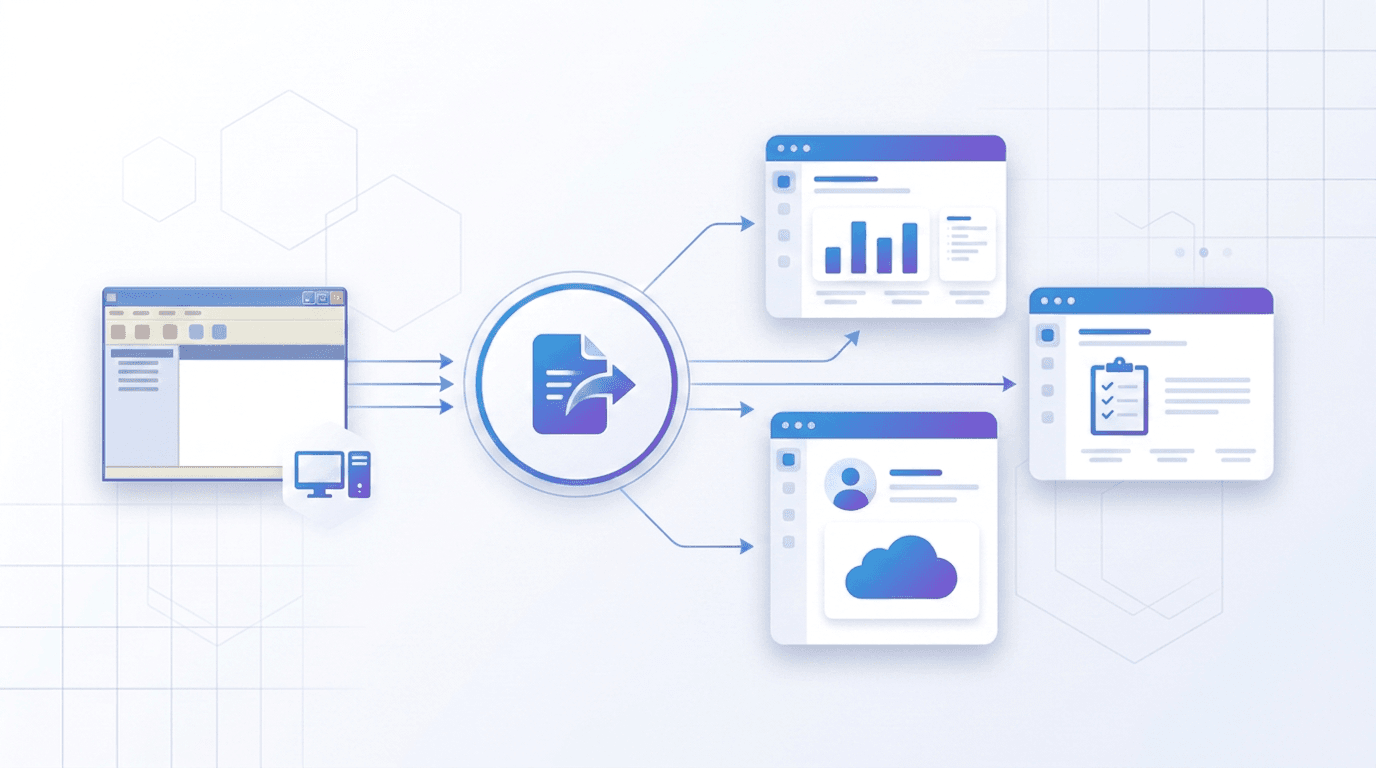
Calyx Point has been a fixture in mortgage broker technology since 1991. Many small and mid-size brokerages still run it daily. As cloud-native LOS platforms close the feature gap and Point's desktop architecture starts to feel its age, more brokers are evaluating what comes next. This guide covers Calyx Point alternatives worth considering, the realities of migrating off Point, and how to plan a switch that does not disrupt your pipeline.
Why are brokers migrating from Calyx Point?
Three factors drive most Calyx Point migration decisions:
- Architecture. Point is a Windows desktop application that stores files locally. That model worked when one or two loan officers shared a back office. It struggles with remote work, multiple offices, real-time collaboration, and modern backup expectations.
- Pace of innovation. Calyx Point releases compliance updates regularly, but the platform has not added meaningful new capabilities in years. Cloud-native competitors ship new features on bi-weekly or monthly cycles.
- Workflow friction. Borrower portals, e-signature workflows, and lender submission integrations are bolted on rather than native. Brokers find themselves stitching Point together with Floify, DocuSign, and lender-specific portals.
None of these are hidden problems. Calyx itself acknowledges them by offering Calyx Path, the cloud-based successor product. The question is whether to go to Path or to evaluate the broader market.
What should you evaluate before switching?
A migration that goes wrong costs more than staying on a slow platform. Before committing to any alternative, work through these:
- Data portability. Can you export your existing loan data in a usable format? Calyx Point uses proprietary .pt7 file formats. Most modern LOS platforms accept Fannie Mae 3.4 (MISMO) imports, which Point can produce, but the export-to-import handshake is rarely clean. Plan to map fields manually for closed loans you want carried over.
- Lender integration coverage. Pull a list of every wholesale lender you submitted to in the last 12 months. Verify that the candidate platform integrates with each one. A platform that connects to 200 lenders is useless if your top three are not on the list.
- Compliance continuity. TRID timelines, disclosure templates, audit trails, and state-specific addenda. Confirm the new platform handles every program you originate, including FHA Connection access if you do FHA, and any state housing finance agency integrations you use.
- Total cost over three years. Per-user monthly pricing, implementation fees, training time, integration setup, and the productivity cost of the transition itself. Sticker price comparisons are misleading without these.
- Training overhead. A loan officer who knows Point well takes weeks to get fully productive on a new system. Multiply that by every user in your shop.
What are the modern Calyx Point alternatives?
The realistic alternatives for an independent broker shop fall into four categories:
- ARIVE. Built specifically for brokers, $50/user/month range, full LOS with POS and a 30+ wholesale lender marketplace. The most direct functional replacement for brokers who want a known feature surface.
- AcutisLOS. $295/user/year, cloud-native, AI-powered document extraction. The lowest-priced option in the modern LOS market, though newer with a shorter track record.
- Floify plus a different LOS. If your real complaints with Point center on borrower experience and document collection, Floify can pair with another LOS to handle those weaknesses without a full rip-and-replace.
- Calyx Path. The cloud-based successor from Calyx itself. The migration path is shortest because the vendor relationship and many workflows carry over.
For deeper feature comparisons of these platforms, see the Encompass alternatives guide; the same evaluation framework applies whether you are migrating from Encompass or from Calyx Point.
Should you consider Calyx Path?
Calyx Path is worth a serious look for current Point users specifically because the migration friction is lowest. Calyx provides a documented path from Point to Path, which most other vendors cannot offer.
Reasons to choose Path:
- Vendor-managed migration with structured data mapping
- Familiar terminology and workflow conventions carried forward
- Existing Calyx Connect lender relationships continue to work
- Compliance configuration carries over rather than being rebuilt
Reasons to evaluate beyond Path:
- Path is still a relatively young product compared to ARIVE or Encompass. Integration depth is uneven across wholesale lenders.
- The product roadmap has been incremental rather than transformative. Brokers who are migrating because they want a fundamentally more modern experience may find Path is a smaller step than they expected.
- Pricing transparency is limited. Calyx publishes Point pricing but quotes Path on request, which makes apples-to-apples cost comparisons harder.
The honest assessment: Path is the lowest-risk migration target for brokers happy with Calyx as a vendor. It is not automatically the best LOS for brokers who already concluded Point's vendor was not serving them.
How do you actually migrate from Calyx Point?
A migration that holds together has four phases. Plan for a 60 to 90 day window.
Phase 1: Inventory and prep (weeks 1-2). List every active loan in your pipeline. Group them by status: pre-approval, in process, conditional approval, clear to close, post-close. Identify which loans must close on Point because they are too far in to migrate, and which can transition. Pull a list of every report, template, and saved query you use in Point.
Phase 2: Data export and mapping (weeks 3-4). Generate Fannie Mae 3.4 exports from Point for the loan data you want to carry forward. Most modern LOS platforms ingest 3.4 files but reject or mangle some custom fields. Test with a representative loan first. Document every field that does not map cleanly so you can decide whether to manually correct, ignore, or carry the original Point file alongside.
Phase 3: Parallel run (weeks 5-8). Process new applications in the new LOS while continuing to close existing pipeline in Point. This phase is the highest-risk window because your team is operating in two systems at once. Limit it to as short a period as your pipeline allows. Pick one loan officer as the early adopter and have them work through 5 to 10 full files in the new system before scaling to the full team.
Phase 4: Cutover and Point retirement (weeks 9-12). Once the parallel run produces clean closings, stop accepting new applications in Point. Continue closing the Point pipeline tail. When the last Point loan closes, archive the Point database (keep a working installation for at least seven years for audit purposes) and decommission active Point licenses.
Two common failure modes to avoid:
- Skipping the parallel run. Big bang cutovers in mortgage operations almost always blow up the pipeline. Even a short parallel run catches data mapping issues before they become closing delays.
- Not preserving Point data. State and federal record retention requirements outlast the loan. Keep at least a read-only Point installation for the longest applicable retention window in any state you originate in.
What about the knowledge layer no LOS handles?
Whether you migrate to Path, ARIVE, AcutisLOS, or stay on Point, none of these platforms address the time you spend looking up agency guidelines for a tricky scenario. LOS platforms manage the file. They do not answer the question "is this borrower's gift fund situation eligible under Fannie Mae B3-4.3-04?"
That gap is what Loanwright addresses. Tools like guideline search, condition tracking, and file readiness checklists sit alongside any LOS and reduce the time spent on the research and preparation side of origination. A migration is also a good moment to evaluate the rest of your stack, not just the LOS itself.
For more on broker technology and operations, see the Mortgage Broker Operations guide series.
This article is for informational purposes only and is not professional advice. Always verify against current vendor documentation and applicable guidelines before making technology or compliance decisions.
Ready to streamline your loan operations?
Loanwright gives you file readiness checklists, guideline search, and condition tracking in one place.
Or browse our mortgage broker resource hub for primary-source guideline handbooks and regulatory references.
Related posts
Straight-Switch MQR Exemption One Year On: How Renewal Shopping Changed
Straight-switch MQR exemption one year on: impact on renewal shopping for Canadian borrowers and brokers.
OSFI 2024 Residential Mortgage Risk Regulatory Notice: Rules Brokers Overlook
March 11, 2024 Reinforcing RESL Regulatory Notice: risk practices brokers commonly overlook.
VA Builder ID Number Eliminated in 2026: New-Construction Loan Impact
Circular 26-25-1 removes the builder ID number requirement for new-construction VA loans.